

Commercial Gates
Commercial gates need to support the traffic, access rules, and working hours of the site they serve. UGD can discuss Houston business entrances, delivery yards, and shared vehicle access with attention to the physical gate, operating equipment, and responsibilities for the complete project.
Greater Houston
*Subject to availability. Confirm timing and service scope for your request.
Commercial Gates for Working Entrances
An employee entrance, customer parking entry, and delivery yard serve different patterns of use. Explain the busiest periods, vehicle types, and who handles access decisions. A useful project brief separates ordinary traffic from the peak conditions that can shape the equipment discussion. A daily vehicle count is useful, but it does not describe congestion at a shift change or a delivery queue. Separate ordinary arrivals from the busiest hour and identify any vehicles that need more maneuvering room. For multiple entrances, explain which is intended for deliveries, staff, or visitors. That distinction keeps an access project focused on actual operating needs rather than a generic commercial equipment package.
Houston and Greater Houston businesses can organize a project inquiry around site conditions, including locations in The Woodlands and Conroe. Describe the entrance and operating needs. Equipment suitability, project responsibilities, required specialist work, and appointment availability are assessed before scheduling or pricing commitments. UGD offers free estimates for the proposed work. Include the site contact, the person approving the project, and any property-manager requirements that affect contractor access. If the gate is currently disabled, state its position and whether another entrance is available. An urgent access problem and a planned capacity upgrade may call for different sequences, so clarify which outcome matters first.
Traffic and Access Needs That Shape the System
Peak arrival periods
Shift changes and grouped deliveries may place concentrated demand on an entrance. Describe those periods separately from daily totals so the proposed operating arrangement reflects how traffic actually arrives.
Different groups of users
Identify employees, contractors, visitors, and delivery drivers. Explain who needs regular access and who needs an approval process, then discuss compatible controls for those distinct requirements.
Movement beyond the gate
Consider vehicle waiting space and the route through the property. Automated vehicle gates also require separate pedestrian access, so walking routes belong in the wider entrance discussion.
Coordinate Equipment, Administration, and Installation
1
Map operating patterns
List entrance locations, typical opening periods, and the activities each one serves. Multiple gates should be identified separately even when they look alike, because their use and existing equipment may differ. Record how drivers request entry and where they wait for approval. Identify whether the gate must serve long vehicles, repeated short trips, or occasional deliveries outside ordinary operating hours. Do not assume an operator described as commercial suits every traffic pattern. The specified equipment should be checked against the gate characteristics and manufacturer application limits, with required protective devices considered as part of the same system.
2
Define access administration
Identify who manages access credentials and how staff changes are handled. Requested reporting or connected features must be verified for the actual proposed equipment and supporting services. For shared credentials, define who can add users, remove access, and respond when an entry device is lost. Ask which requested functions are supported by the exact controls and whether they depend on a separate account, network connection, or subscription. Keep access codes and administrator credentials out of general project emails. The handover should identify the responsible owner and provide the relevant product documentation.
3
Coordinate the work window
Describe site access requirements, related contractor work, and any alternate entrance. Review the expected interruption and project sequence before relying on a particular work period or continuity arrangement. Agree on how deliveries and staff vehicles will be handled while the entrance is unavailable. Do not rely on a disabled or partially installed gate as a temporary traffic-control method. The proposal should distinguish gate fabrication, supports, electrical work, operator installation, and access-control integration. Establish any dependencies and acceptance checks before scheduling work around a business event or a critical delivery period. For related service details, see warehouse and industrial garage doors.
Business Traffic
Build the brief around peak use and actual vehicle movements.
User Groups
Distinguish recurring access from visitors and delivery arrivals.
Site Coordination
Identify the people responsible for access and project decisions.
Equipment Verification
Confirm application limits and requested features for the proposed system.
Commercial Gates Illustrations
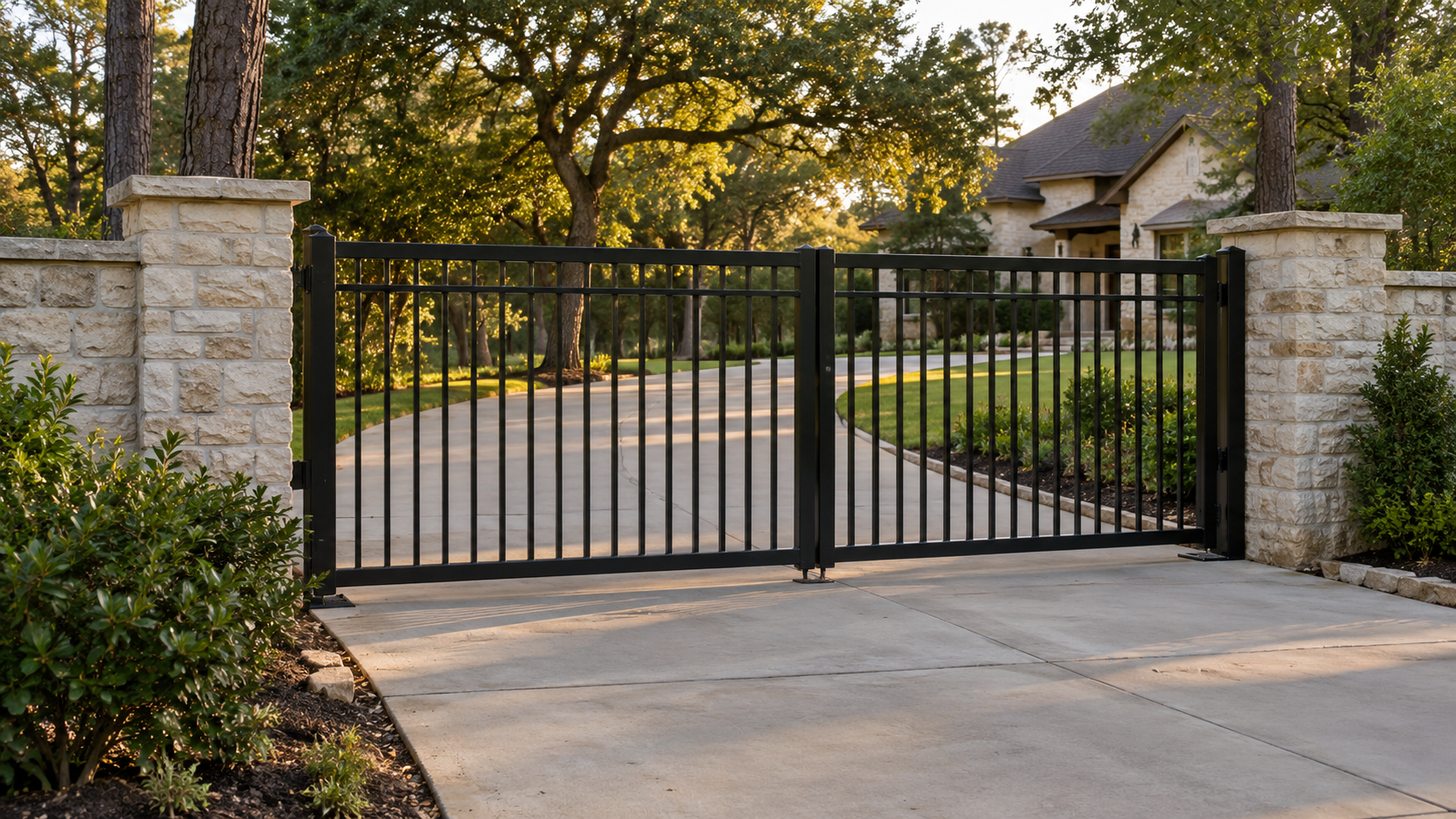
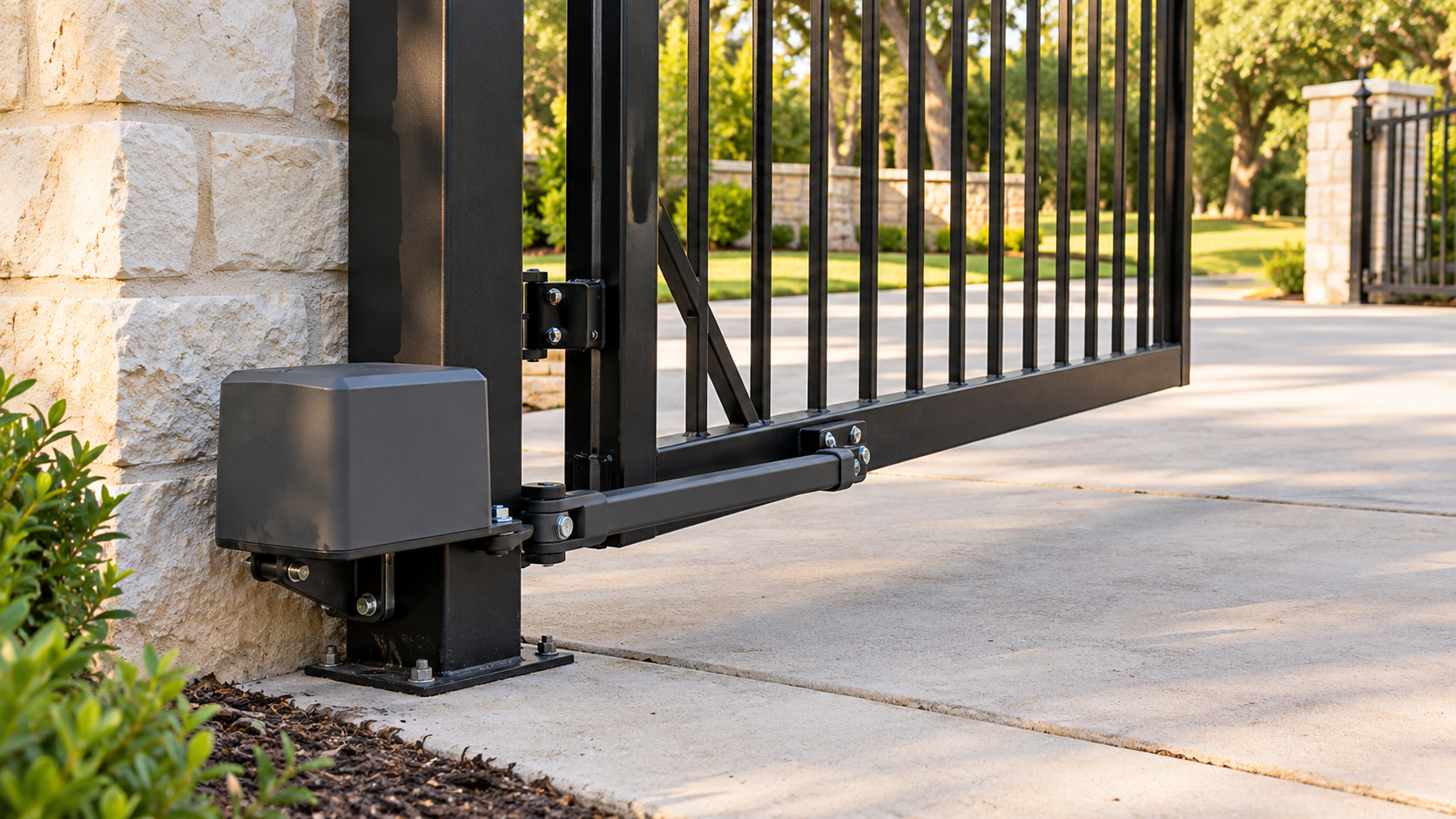
Illustrative gate and access-system details. These images do not establish a product model, service capability, or completed UGD project.
Illustrative setting
Illustrative detail
Commercial Gates Questions
Does a commercial site always need the largest operator?
No. Selection depends on gate characteristics, operating frequency, and manufacturer application limits. A commercial address alone does not determine the correct operator or complete system. A large operator cannot compensate for an unsuitable gate or poor traffic layout. The selection should reflect the gate’s movement, dimensions, construction, and expected duty, together with the required controls and safety arrangement. Ask for a model-specific explanation. Where more than one entrance is involved, there may be good reasons to specify different equipment even if the gate designs look similar. For additional background, see LiftMaster facility gate operators.
Can a gate share existing access credentials?
That requires compatibility review. Identify the current access system and the desired workflow before assuming existing cards, codes, or connected services will work with proposed equipment.
Can work be planned around business hours?
Business constraints should be stated early. Scheduling, access interruptions, and sequencing need agreement for the specific project. Discuss alternate access and the expected work period before making plans that depend on the entrance remaining available.
Discuss Commercial Gates
Prepare the site location, traffic patterns, existing equipment, and business access priorities for your inquiry. This form is not accepting requests yet.
This form is not accepting requests yet.
Garage door service for Houston, The Woodlands, Conroe and Greater Houston communities.