

Gate Opener Repair
Gate opener repair in Houston starts by separating an electrical or control fault from a physical gate problem. If the gate stops, reverses unexpectedly, or ignores a remote, UGD can discuss the symptoms and the assessment needed before a motor or complete operator is replaced.
Greater Houston
*Subject to availability. Confirm timing and service scope for your request.
Gate Opener Repair for Unresponsive or Unreliable Gates
A gate that does not move, responds inconsistently, or stops unexpectedly needs an assessment of the complete operating system. Controls, protective devices, the operator, and the physical gate all provide context. Do not assume a motor replacement is needed from one symptom alone. Useful observations include whether the problem affects one remote or every control, whether an indicator is visible, and whether the gate stopped at the same location previously. Report only what you already know; there is no need to recreate an unsafe fault. An operator can appear unresponsive when another part of the system is preventing movement, so the repair should follow an assessment rather than a guess based on motor noise.
For a Houston or Greater Houston service inquiry, describe the model if known and how the problem affects access. Include the location for requests in The Woodlands or Conroe. The equipment, symptoms, required repair work, and appointment availability are assessed for the individual system. UGD offers free estimates. Tell us whether the gate is open, closed, or partly open and whether another entrance is available. At a business or shared property, identify who can authorize the work and arrange access to relevant documentation. Same-day requests depend on availability and the needs of the specific system. An initial conversation cannot guarantee an immediate repair, particularly when the equipment or required components are not yet identified.
Describe the Gate’s Response Without Forcing It
No response to a control
Explain which control was being used and what you observed. Existing observations are enough; avoid repeated attempts to operate equipment that appears damaged or behaves unpredictably.
Interrupted movement
Describe where movement stopped and whether there was an unusual sound or visible condition. Do not change settings or bypass protective devices to force the gate to complete its travel.
Physical resistance or damage
Mention dragging, leaning, or a known impact as well as the control symptom. A mechanical condition may need its own assessment rather than an opener-only repair proposal.
Identify the Fault and the Repair Scope
1
Collect existing records
Use installation paperwork or an accessible label photograph to identify the equipment. Do not remove covers or approach moving parts to obtain model details; an unknown model can be stated as unknown. A service record can help identify previous replacement parts, recurring faults, and changes to controls. Keep model photographs limited to labels that can be read safely without entering an enclosure or reaching into the operator. If paperwork is missing, describe the visible arrangement and let the professional identify it during assessment. The goal is accurate equipment identification, not a homeowner-led electrical inspection.
2
Explain recent changes
Mention a recent power interruption, new access device, or prior repair if relevant. A short factual timeline is more helpful than a diagnosis based on an online symptom list. Explain whether the issue started after a storm, a power interruption, a vehicle impact, or a change to entry controls. Avoid treating timing as proof of causation. A problem that affects only an app or keypad may involve a different part of the system from a gate that drags with visible frame damage. Separating those observations helps keep the proposed repair focused on the actual malfunction.
3
Clarify repair boundaries
A proposal should identify the equipment being assessed and any separate electrical, structural, or access-control work. Establish responsibilities for those tasks before assuming every part of the entrance will be handled together. Ask which components were found faulty, what replacement or adjustment is proposed, and how operation and protective devices will be checked afterward. If structural repair or a separate electrical contractor is needed, establish the sequence before scheduling dependent work. Retain the model information and service findings so a later issue can be compared with the current repair rather than starting with an incomplete history. For related service details, see automatic gates.
Observed Behavior
Describe what happened during normal use, without recreating the fault.
Equipment Identity
Existing records can help establish the correct product documentation.
Physical Context
Include gate damage and movement concerns alongside control symptoms.
Defined Repair Scope
Confirm which systems and specialist tasks the proposal covers.
Gate Opener Repair Illustrations
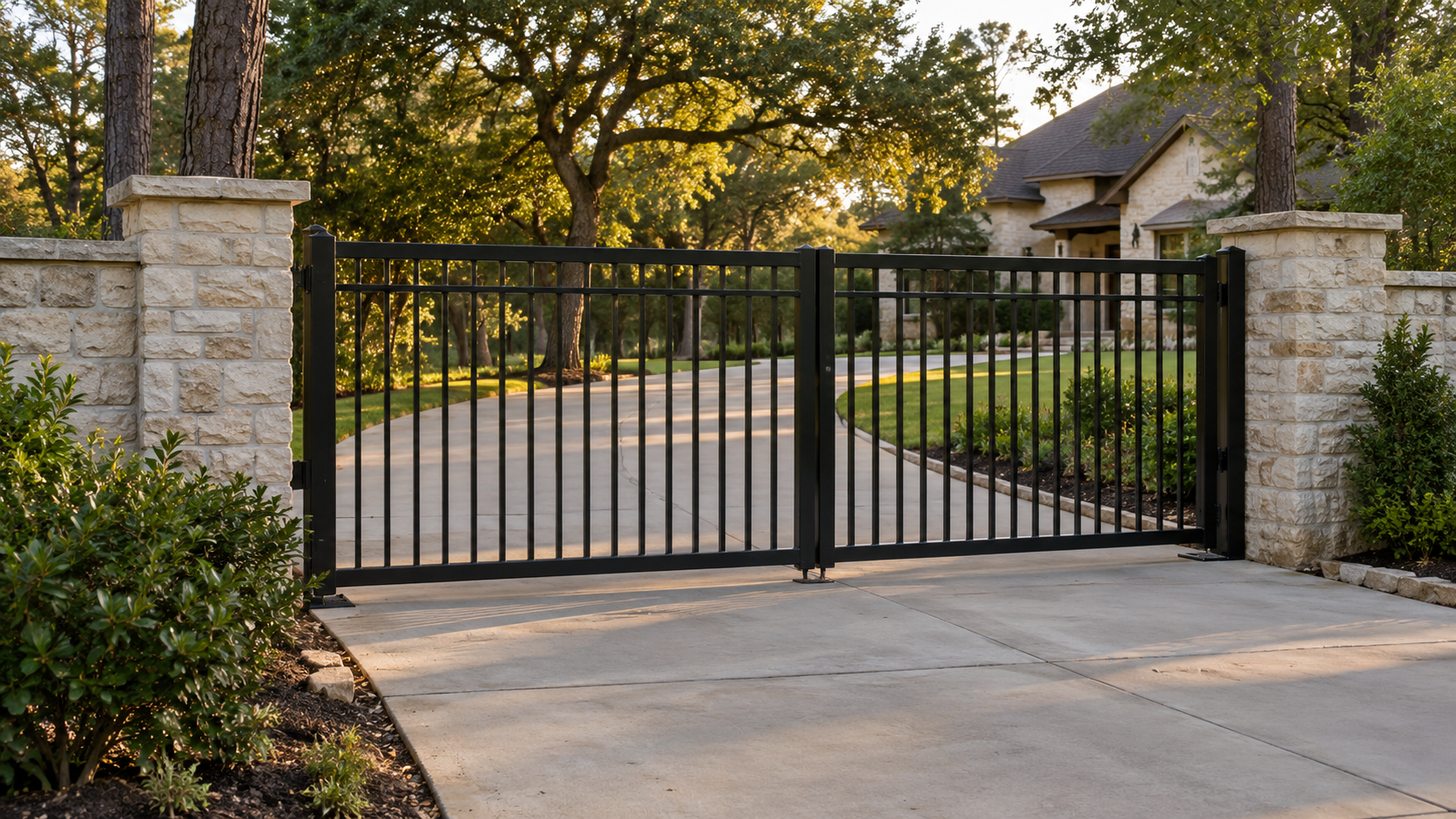
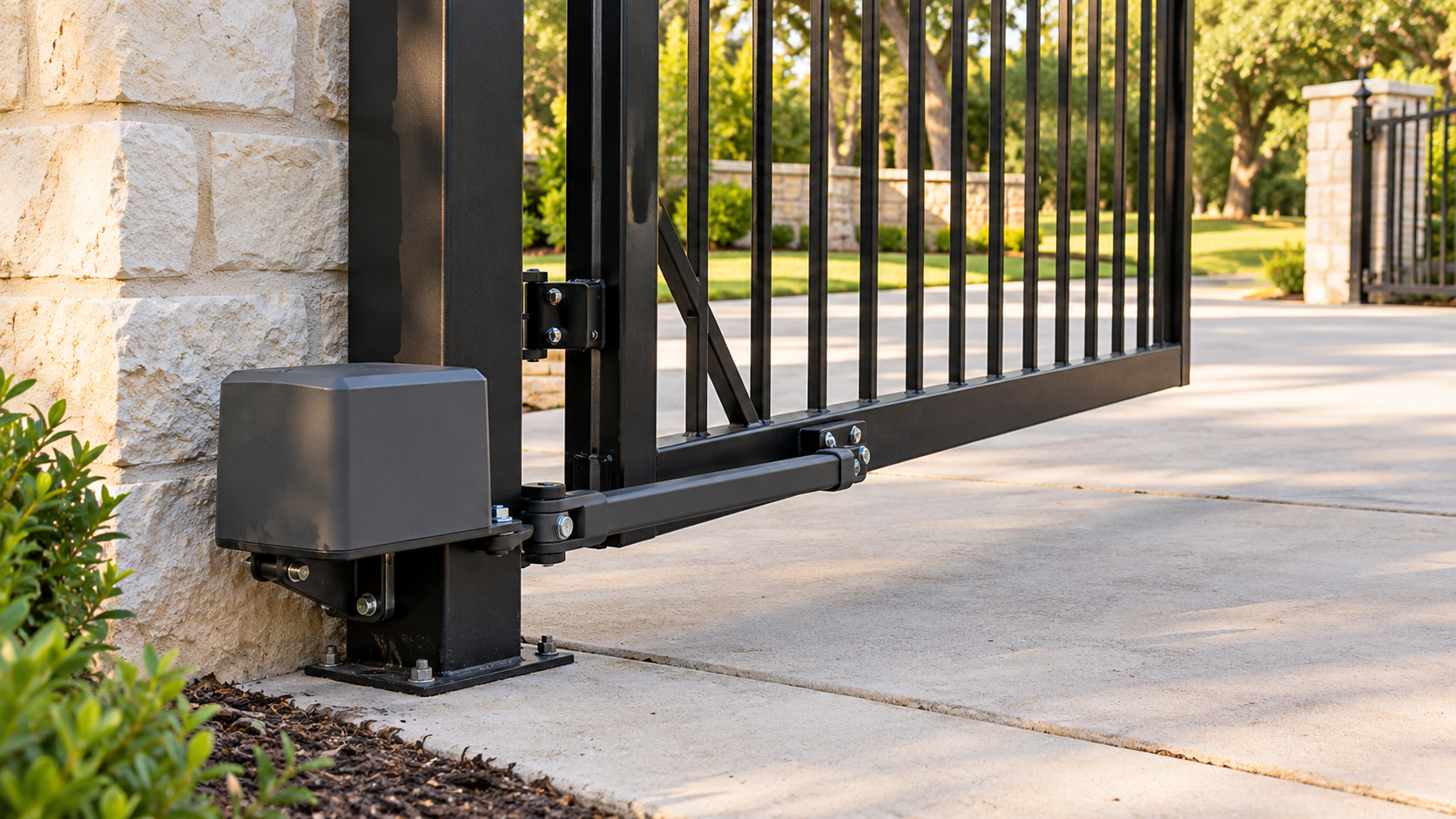
Illustrative gate and access-system details. These images do not establish a product model, service capability, or completed UGD project.
Illustrative setting
Illustrative detail
Gate Opener Repair Questions
Does a working remote prove the opener is faulty?
No. A single observation does not isolate the cause. The complete system and exact equipment need assessment before deciding which component requires repair or replacement. A remote transmitting a signal does not establish that the receiver, controls, protective devices, or operator are functioning correctly. Nor does a running motor prove the physical gate is free to move. An assessment should explain the relationship between the observed symptom and the proposed part. If a complete operator replacement is recommended, ask what rules out a narrower repair and whether existing accessories remain compatible. For additional background, see DASMA gate opener safety.
Should I keep trying an intermittent gate?
Stop using equipment that moves unpredictably or appears unsafe, and keep people clear. Arrange an appropriate professional assessment instead of repeated operation to reproduce the symptom.
Can a safety device simply be disconnected?
No. Protective devices are part of the operating system. Their condition and compatibility require proper assessment; bypassing them is not a repair solution.
Discuss Gate Opener Repair
Prepare the equipment details, observed symptoms, and location for your service inquiry. This form is not accepting requests yet.
This form is not accepting requests yet.
Garage door service for Houston, The Woodlands, Conroe and Greater Houston communities.