

Commercial Roll-Up Doors
Commercial roll-up doors use a curtain that stores above the opening, offering a different arrangement from linked overhead sections. UGD can discuss Houston rolling-door requests around the actual product, mounting space, operating demand, and any documented performance needed for the facility.
Greater Houston
*Subject to availability. Confirm timing and service scope for your request.
Commercial Roll-Up Doors for the Right Opening
Commercial rolling products vary in construction and application. Identify whether the request concerns an existing door, a replacement, or a new opening. The product’s arrangement and documented capabilities are more useful than a general description alone. The term roll-up covers products with different construction and intended use. A service-door curtain, a sheet-door arrangement, and a specialized rated closure should not be treated as interchangeable simply because each rolls upward. Start with the current product identification or the opening’s purpose. Then compare the configuration and documented capabilities that fit the job, including whether the door is used occasionally or many times during a shift.
For Houston and Greater Houston properties, describe the access problem or project goal before selecting equipment. UGD offers free estimates. The specific rolling-door request, available products or parts, and accepted scope need individual confirmation. For an existing door, note the manufacturer label and describe any curtain damage, changed movement, or operating fault from a safe position. Do not open a housing or try to adjust the counterbalance system. For a new opening, provide available plans and explain nearby equipment or building features. Both requests benefit from a clear description of access needs and the period when the opening can be unavailable.
Curtain Construction, Space, and Daily Use
An existing curtain is damaged
Describe the visible condition and any impact that preceded it. A repair assessment must consider the door configuration before anyone assumes that a section or component can be replaced.
Movement becomes inconsistent
Note whether the door hesitates, makes a new sound, or stops at the same position. These observations describe the concern without establishing which component is responsible.
The building needs different access
A change in vehicles, deliveries, or use of the space may prompt a new door discussion. Explain the operational change so the selected product can be evaluated against it.
Specify the Rolling Door and Its Operating Equipment
1
Identify construction and mounting
Rolling steel service doors use a curtain that coils above the opening. The selected product still needs suitable mounting and clearance; a compact arrangement does not remove those requirements. The coil or hood, guides, mounting supports, and operating equipment require their own space. Confirm these against drawings for the selected model rather than assuming that any rolling door will fit where an older one was installed. Identify who verifies the supporting conditions. An opening with limited overhead or side room may need a specific product solution, not just a smaller motor or a different curtain material. For related service details, see commercial sectional doors.
2
Describe the operating demand
Share expected use frequency and whether operation is manual or powered. Do not assume all rolling products have equivalent operating capabilities simply because their curtains move in a similar way. Describe the busiest operating period as well as the daily total. Manual operation, powered operation, and requested access-control functions have different implications for the proposal. An operator should suit the identified door and expected duty, with the required protective arrangement. If an existing motor is retained, ask how its compatibility and condition will be established rather than assuming reuse is possible from the mounting position alone. For related service details, see commercial garage door installation.
3
Separate ordinary and rated products
Fire or wind performance requires appropriate product documentation and a separately confirmed scope. Identify the exact rated assembly and project requirements when discussing specialized work rather than relying on a standard rolling-door description. Where thermal, wind, fire, smoke, or security performance is specified, identify the exact requirement and the documentation supporting the chosen assembly. Do not infer these properties from curtain thickness or the word commercial. The proposal should also distinguish installation, removal, electrical coordination, controls, and any specialist work. Confirm product availability and the site work window before planning around a return to normal access. For related service details, see fire-rated commercial doors.
Free Estimates
Discuss the identified door and proposed work before approving a repair or replacement.
Application Details
Share use frequency, access needs, and the conditions surrounding the commercial opening.
Product Identification
A readable label or existing product record can help focus the service discussion.
Houston-Area Requests
Confirm location and scheduling for Houston, The Woodlands, Conroe, and other nearby projects.
Commercial Roll-Up Doors Illustrations
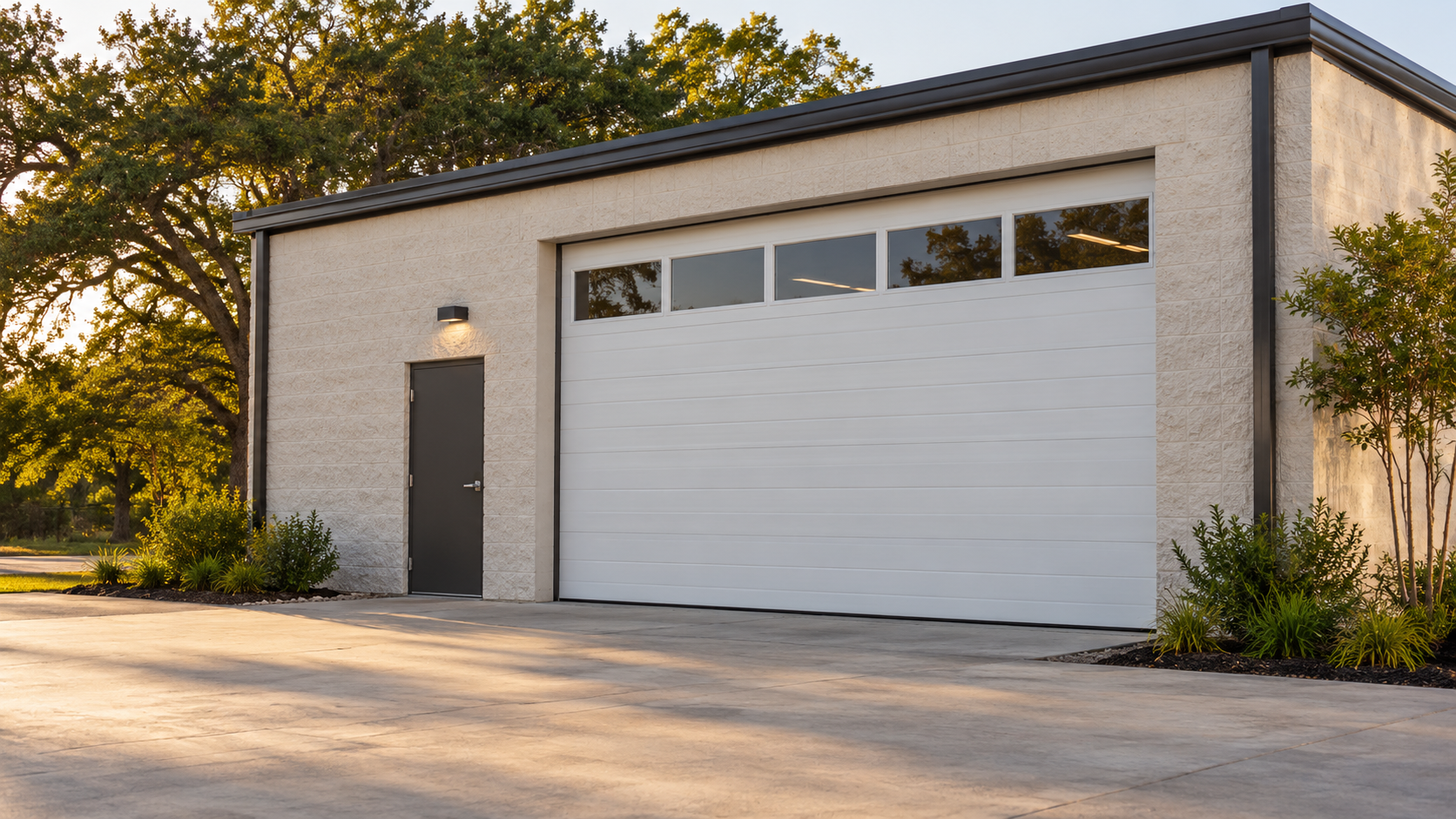
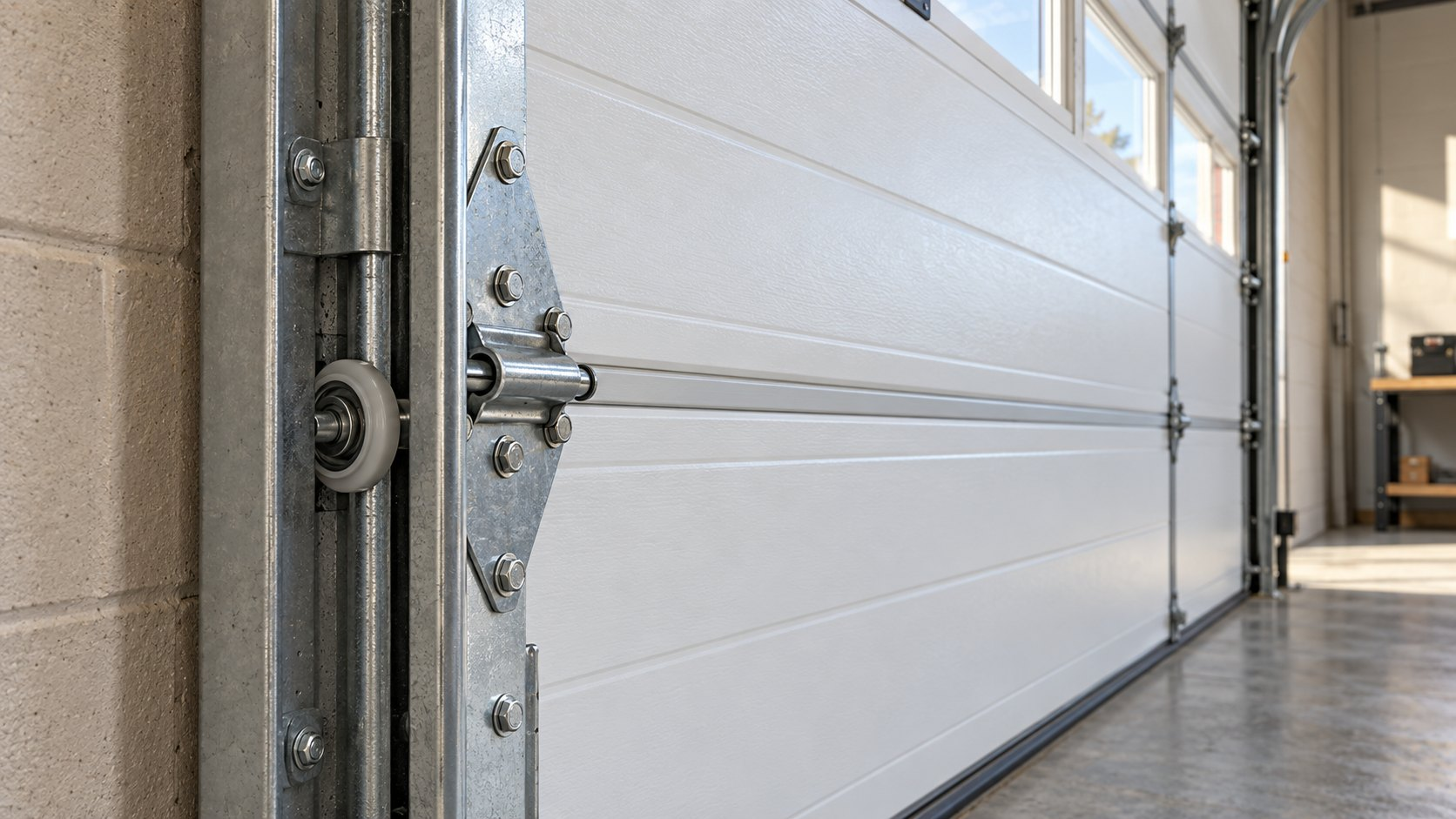
Illustrative commercial door setting and hardware detail. These images do not depict verified UGD projects or specify a specialized product.
Illustrative setting
Illustrative detail
Commercial Roll-Up Doors Questions
Is a roll-up door the same as a sectional door?
No. A rolling curtain coils above the opening, while a sectional door uses linked panels traveling on a track arrangement. Each has installation requirements. Suitability should be considered against the building space and operating needs. The difference affects how space is used and how the complete assembly is supported and operated. A sectional alternative may offer a useful configuration for one building, while a rolling arrangement may better suit another. Compare the actual installation requirements, traffic needs, and selected options rather than declaring either style universally better. The appropriate choice follows the opening and the job it needs to perform. For additional background, see Cookson rolling service door information.
Does a roll-up door automatically have a fire rating?
No. A fire rating is a specific documented product characteristic, not an automatic feature of a rolling door. A fire-rated request needs the exact system identified and the required service capability confirmed before arrangements are made.
What helps identify an existing commercial rolling door?
A readable manufacturer label, model details, or available product records can help. Also describe its operating arrangement and the reported problem. Those details provide context, but parts compatibility and repair suitability require separate confirmation.
Discuss Commercial Roll-Up Doors
Describe the rolling door and the work being considered. This form is not accepting requests yet.
This form is not accepting requests yet.
Garage door service for Houston, The Woodlands, Conroe and Greater Houston communities.